
Blown-in insulation in Lakeville MN - an even layer from the eaves to the middle
Cold rooms upstairs or a heating bill that climbs every winter? We seal the gaps and blow in an even layer across your whole attic.
Request an estimate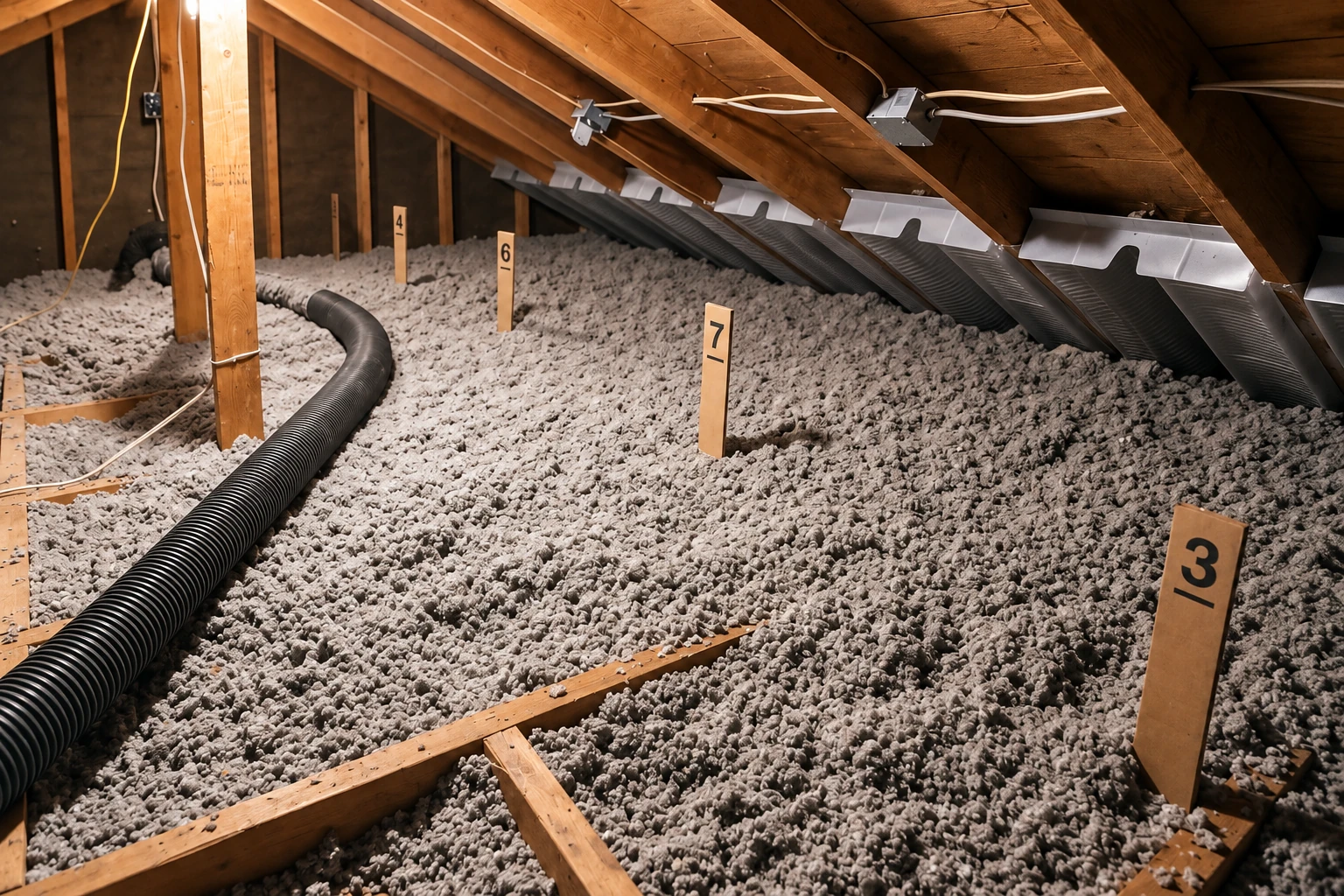
Will blown-in insulation warm up a cold upstairs?
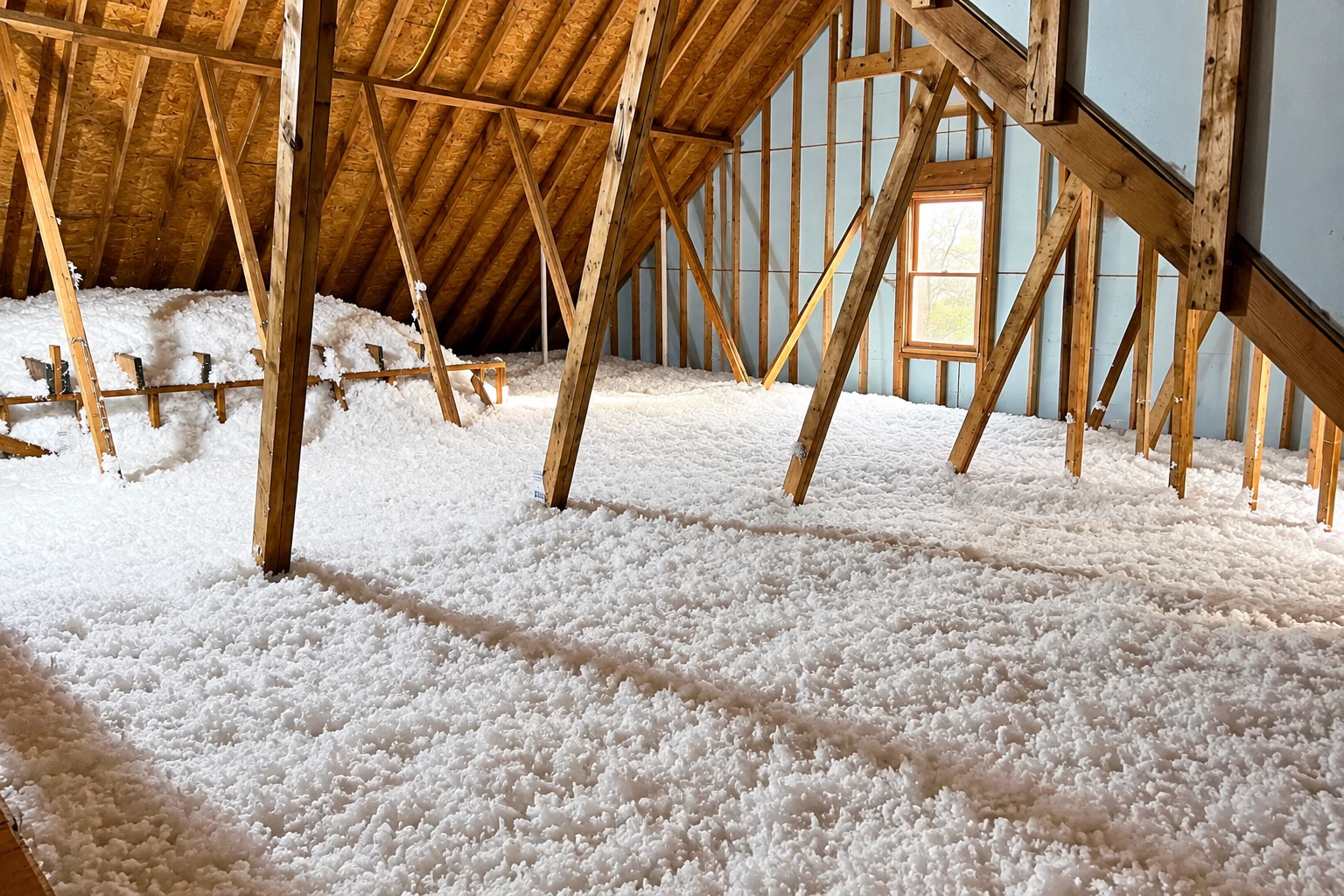
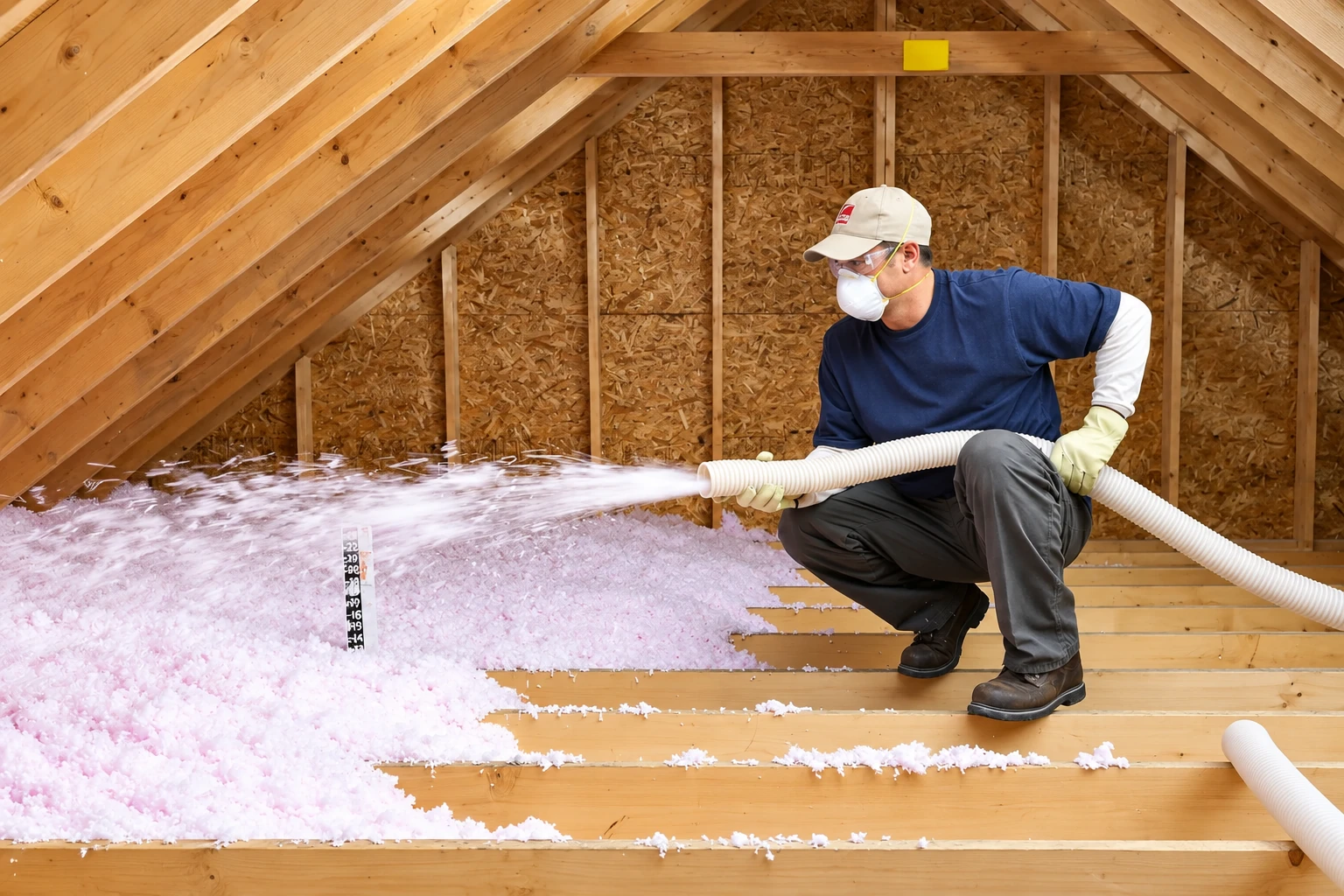
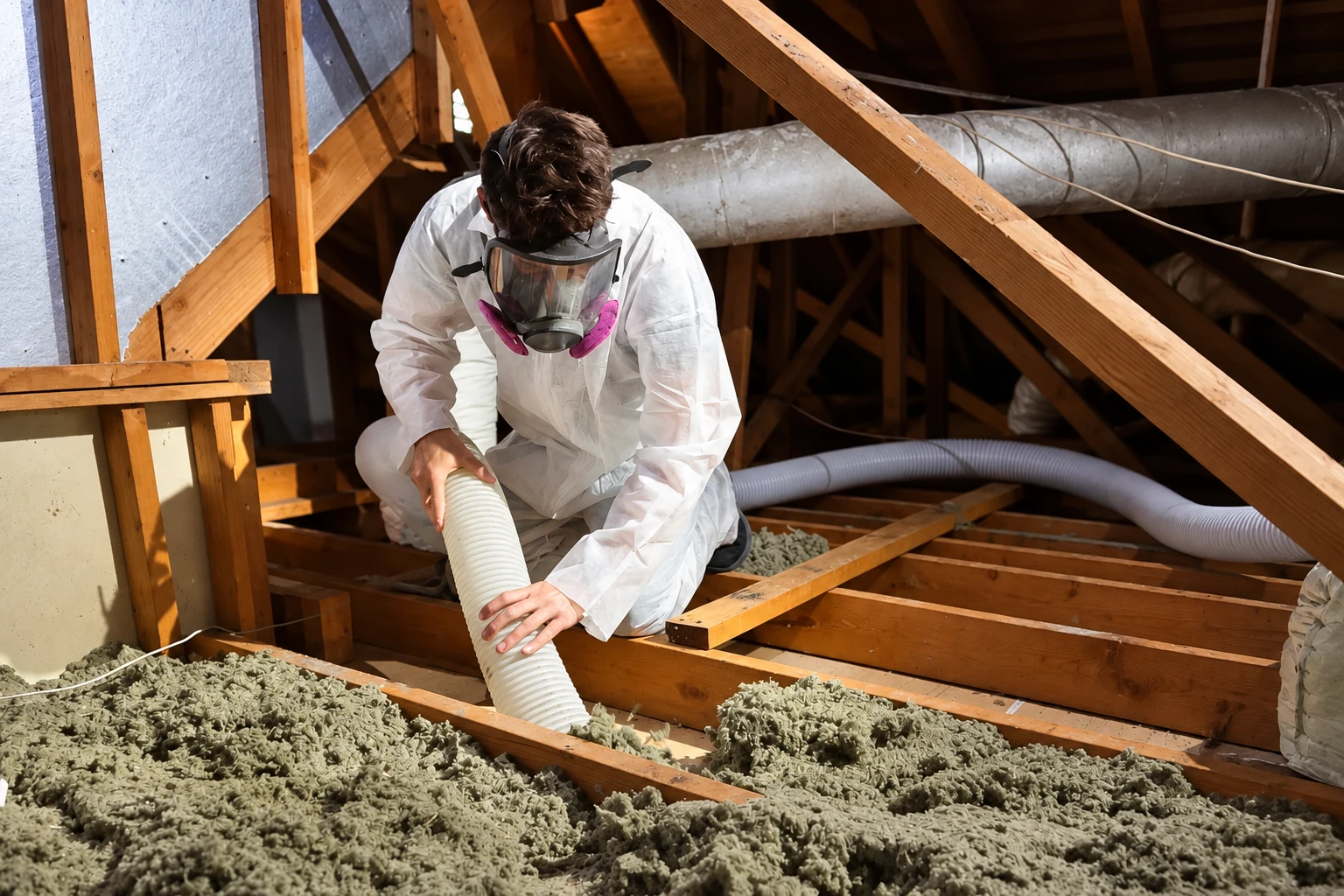
Blown-in insulation is loose cellulose or fiberglass that we blow through a hose into your attic, where it fills in around the framing as one even layer and slows the heat leaving your Lakeville home. It's the usual way to add more insulation to an attic that already has some, and in most houses the work stays up in the attic.
Most people who call me about this have a room that won't stay warm, a heating bill that keeps creeping up or ice building along the roof edge. The price mostly comes down to how much work your attic needs, so it moves with the size of the attic, how many inches are already up there, how many gaps need sealing, which material you pick and whether any old insulation has to come out first. The schedule turns on the same things, plus anything that has to be fixed before we start, like a roof leak, and your estimate puts each step on its own line so you can see what each one costs.
How our crew does blown-in insulation
I start by looking at what's already in your attic and how deep it is, and we talk through cellulose, which is recycled newspaper, and fiberglass, because one settles more over time and the other handles getting wet better, so the right pick depends on your attic. If the old layer is soaked or fouled by animals, we deal with that first, since new material on top just buries the problem. Next our crew does air sealing, which means closing the gaps around can lights, pipes, wires and the attic hatch, so the new insulation isn't fighting a draft. We set plastic baffles between the rafters at the eaves to keep the vents open, because a buried vent stops the attic from breathing and moisture ends up in the framing. Then we blow the insulation in with the machine, keeping it full depth out to the edges instead of piled up in the middle, and we clean up before we leave.
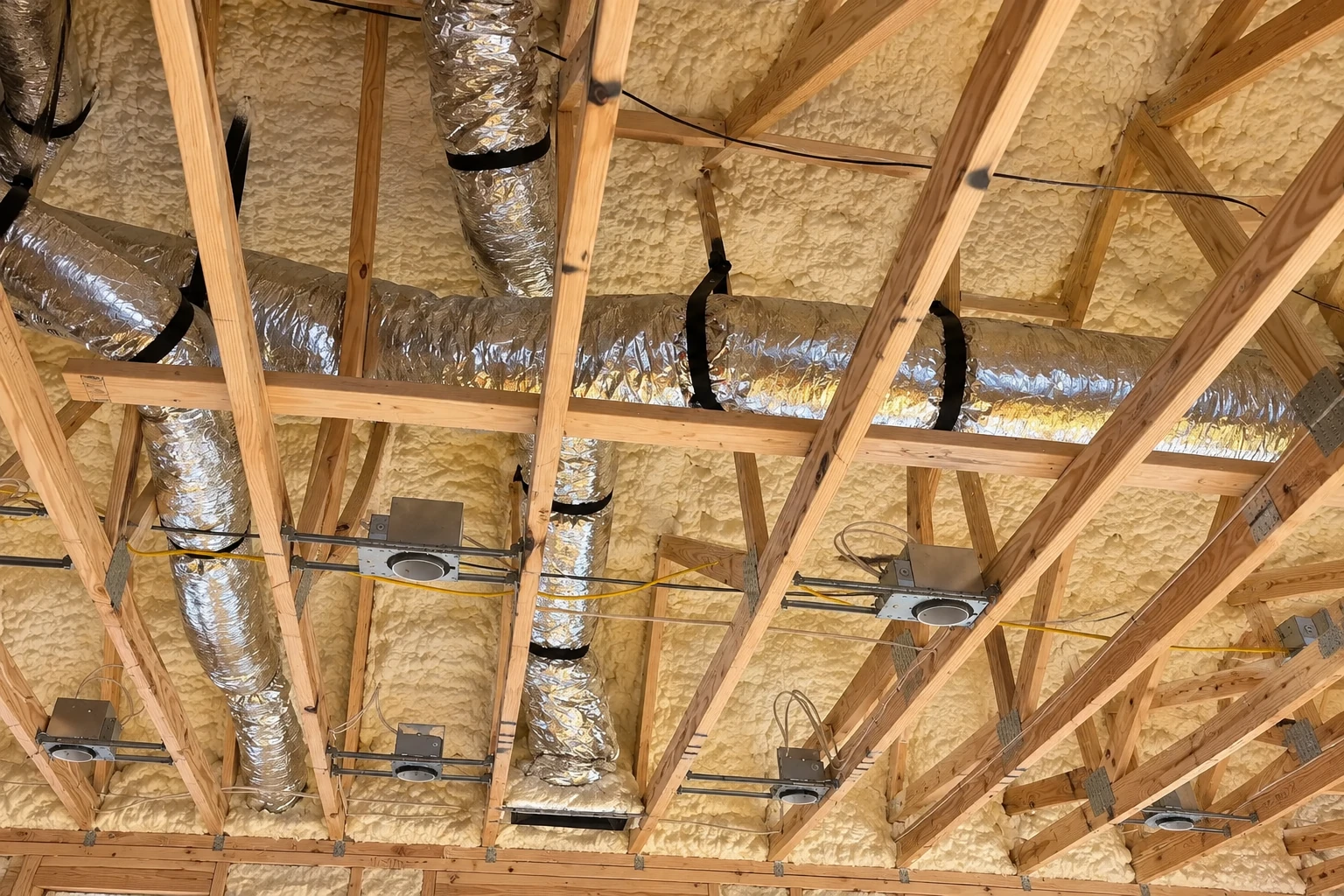
I'll also tell you plainly that spray foam costs more and seals air while it insulates, but for most attics sealing the gaps and topping up with loose fill gets you more for the money, unless your ductwork runs up there. If the cold is coming through the walls and floors too, our home insulation work looks at the whole house together. When the old attic layer is wet or moldy, insulation removal comes first so the new layer starts clean.
What to check first before blown-in insulation in Lakeville
The city of Lakeville requires a permit to build, alter or repair a building or structure, and its Building Inspections office answers permit questions before any work starts. Whether your attic job needs one is the city's call, so when we're not sure, we check with that office before we start, and when a permit is needed we pull it, sign for it and set up the inspections.
Most attics I look at around here already have some insulation, and most of them can use more, but the first thing I check is what that old layer is made of. If any of it looks like gray-brown pebbles, it may be vermiculite, and the state health department says the safest thing to do with intact vermiculite is leave it alone, because disturbing it may release asbestos fibers. When I see it, we stop and talk before anyone touches it, since the department strongly recommends a Minnesota-licensed asbestos contractor for removal, not our crew, and any cracks where it's spilling into the house should be sealed right away. We find the same mix of older and newer attics on jobs in Apple Valley and Farmington, so the same checks come first there too.
- Call (651) 268-6023
- Mon–Fri: 7 AM–10 PM, Sat–Sun: 6 AM–11 PM
- Lakeville, MN 55044
What happens after you call about blown-in insulation in Lakeville?
Call or send a message
Tell us what you're noticing, like a cold room or ice on the roof edge. We get back to you and set a time for me to come out.
I look at your attic
I come out myself, check the attic, measure what's already up there and answer your questions. You get a written estimate with every step on its own line, so you can see what you're paying for before you decide.
Fix anything that comes first
If there's a roof leak or water getting in, I tell you before we put you on the schedule. New insulation over a wet spot just soaks it up again.
We do the work together
Our installers seal the gaps, set the baffles and blow in the new layer. When they're done, I walk through the finished attic with you.
Why Lakeville homeowners call Quality Lakeville Insulation Services for attic top-ups
The owner writes your estimate
I started out on the sales side of this trade, so I know how easy it is to push a bigger job than a house needs. I come out myself and tell you straight whether your attic needs sealing more than it needs more material.
Learned in attics, working since 2017
I learned this work crawling through attics, basements and crawl spaces next to experienced installers before I started the business in 2017. That's why I check the edges, the vents and the old layer before I talk about depth.
Sealing and baffles on every estimate
Minnesota's attic insulation guide counts air sealing and eave baffles as part of every attic job, so both show up as their own lines on our estimate instead of being left off to shrink the number. Our work is satisfaction guaranteed.
A licensed and insured crew
We're licensed and insured. That matters here because the state requires a license from contractors who work in more than one special-skill area, and insulation is one of those areas.
The best place to start is a look at your attic, so send a request or call (651) 268-6023 and I'll set a time to come out.
Request an estimateGet a blown-in insulation estimate with every step on its own line
Send the form and we'll reply within one business day to set up a visit. I come out myself, look at your attic and answer your questions, then write up a free estimate with no obligation.
- Licensed and insured.
- Phone
- (651) 268-6023
- Location
- Lakeville, MN 55044
- Hours
- Mon–Fri: 7 AM–10 PM, Sat–Sun: 6 AM–11 PM
Questions about blown-in insulation in Lakeville
Is cellulose or fiberglass better for blown-in attic insulation?
Neither wins in every attic, because cellulose is fire-retardant and slows airflow better, while loose-fill fiberglass is lighter and isn't ruined if it gets soaked. Fiberglass costs more and cellulose breaks down when it's saturated, and cellulose settles about 10 to 20 percent over time against 2 to 4 percent for fiberglass, so with cellulose you plan on losing some depth. Cellulose is also too heavy for mobile home ceilings, where fiberglass can be used.
Do I have to remove my old insulation before adding blown-in insulation?
Usually not, because blown-in insulation can go right over what's already there, so most jobs just add a new layer on top. The exception is old insulation that's wet from a roof leak or from moisture coming up out of the house, which needs to come out first.
Do I need a permit for blown-in insulation in Lakeville MN?
That's up to Lakeville Building Inspections, which answers permit questions before work starts, as I covered above. If your job needs one, we pull it and set up the inspections, so you don't have to.
How much does blown-in insulation cost in Lakeville?
Blown-in insulation in the Minneapolis area usually costs about $2 to $8 per square foot, and that's the going rate around here, not a quote from us. Where your attic lands depends on how much work it needs, which is why your estimate lists each step separately.
How do I insulate existing walls without tearing them open?
Existing walls can usually be insulated by drilling small holes from inside or outside and filling them with dense-pack cellulose, which also seals air very well. It takes an experienced crew, and the holes have to be patched and finished afterward, which can be hard on some exterior finishes, so read more on our wall insulation page.
What causes ice dams on a story-and-a-half house, and will blown-in insulation stop them?
Story-and-a-half houses get ice dams because the upstairs ceiling sits so close to the roof that there often isn't room for enough insulation. Air sealing and insulating wherever we can helps a lot, but it may not get you a house that never sees an ice dam, and I'll tell you that before you pay for anything.
Other work that often goes with it
Home insulation
If the cold isn't only coming through the ceiling, a whole-house look finds the walls, floors and crawl space that need help too.
Insulation removal
When the old attic layer is soaked, moldy or full of rodent mess, taking it out gives the new insulation a clean start.
Tell us what's in your attic now
When you call or send the form, mention your home type and whether the old insulation looks damp or like gray-brown pebbles, so I know what to check first when I come out.
Request an estimateCall (651) 268-6023